
Google Just Started Labeling AI-Made Ads. For Dealers, the Danger Isn't the Label. It's the Photo Behind It.
On July 9, Google started disclosing which ads were made with AI. The headlines say the badge will scare off shoppers. For car dealers the real exposure is quieter: an honor system that puts your dealership's name behind every AI-edited vehicle photo, plus a visible on-ad overlay in New York. Here's what to actually do.
Adam founded Savvy Dealer and has spent 30 years at the intersection of automotive retail and digital strategy.
Want to Learn More?
Book a quick demo to see these strategies in action.
On July 9, Google started disclosing which ads were made with AI. Open the three-dot menu or the little info icon on any ad across Search, YouTube, or Discover, and a "How this ad was made" panel in My Ad Center will now tell you whether that ad was, in Google's words, "created or edited with AI."
If you run a dealership (or, more likely, if a vendor runs your Google Ads for you), the headlines probably read like a warning shot: Google is about to stamp "MADE WITH AI" on your car ads, and skittish shoppers will scroll right past. That's the version of this story that gets clicks.
It's also the version that's mostly wrong. The label lives in a menu almost no shopper will ever open, so the fear that it tanks your click-through rate is overblown. The part of this change that should actually get a dealer's attention is quieter, and it has nothing to do with a badge on a search ad. It's about who's been editing your vehicle photos, and whose name is on the line when one of them isn't true.
What Google actually rolled out
Here are the mechanics, because they matter.
Google will automatically add the disclosure when an advertiser uses Google's own generative AI tools to build an ad. For ads made with any other AI tool, the advertiser has to flip a new switch (Google calls it the "AI label setting") to indicate AI was involved. Per Google's own help documentation, that setting is rolling out gradually throughout July across Google Ads, Display & Video 360, Campaign Manager 360, Merchant Center, and Ads Editor.
And here's the sentence that defines the whole thing. As TechCrunch put it plainly: when an advertiser self-labels (or doesn't), "Google will not perform its own check to determine if that's the case." It's an honor system. Google embeds an invisible SynthID watermark in its own AI outputs, but for everything made outside Google's tools, the disclosure rests entirely on the advertiser being honest.
Google framed it the way every platform frames these moves: "We want to help people better understand the ads they see, while providing advertisers with straightforward tools to navigate evolving industry standards." Fine. But read the honor-system part again with a car dealer in mind, because it changes who owns the risk.
Why this is a car problem, not a banner problem
We've spent two years telling this industry that most "the machines are coming" panic is overblown, and it is. This is the rare case where the boring-sounding development is the important one.
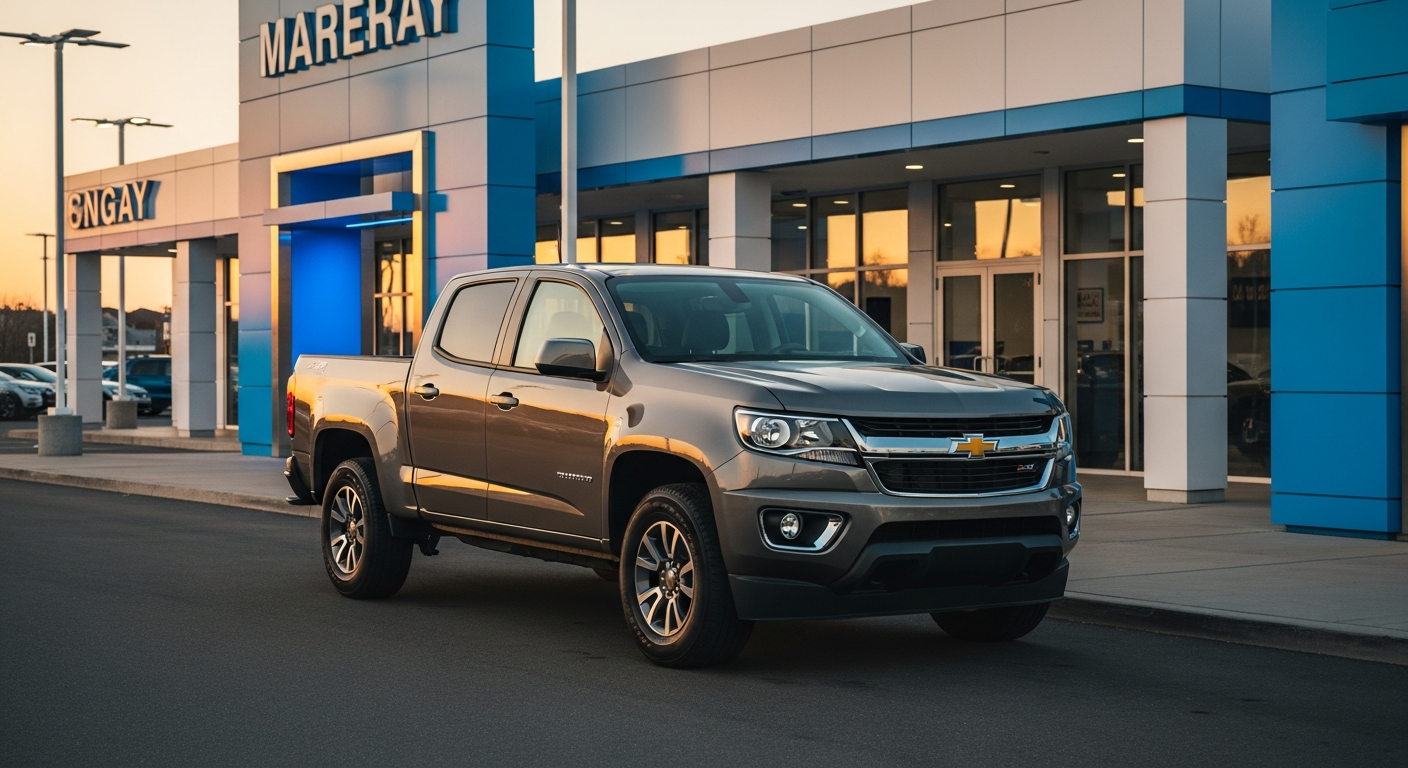
For a lot of businesses, an "AI-made ad" means a punchier headline or a slicker background. Low stakes. But think about what AI image tools actually do in automotive. They swap the gray parking lot behind a truck for a mountain road. They clean up a dented bumper. They "animate a set of still product photos" (Google's own example) into motion. They can render a color, a wheel, or a trim that makes the vehicle look like something it isn't.
That's the difference. In most categories, an AI-generated image is decoration. On a car ad, the image is the product claim. A fabricated photo isn't a prettier ad. It's a vehicle that doesn't exist as shown, advertised to a shopper who's making the second-biggest purchase of their life.
And now Google has built a system that asks whoever made that image to raise their hand, while explicitly refusing to check whether they did.
The accountability lands on your rooftop
Here's the uncomfortable part for most dealers: you are not the one clicking the AI label switch. Your agency is. Your ad vendor is. The freelancer who builds your Facebook and Google creative is. Most dealers have never opened Ads Editor in their life.
But the advertiser of record is your dealership. Your name, your rooftop, your DMS. If a vendor generates a slick AI hero image for your inventory ads, doesn't label it, and that image misrepresents the actual vehicle, the honor system Google just built has your name in the "honor" slot, not theirs.
This connects directly to a fight dealers are already in. When the FTC sent warning letters to 97 dealer groups earlier this year, the real enforcement mechanism wasn't the federal agency. It was the state AGs and the plaintiff's bar using "advertising a vehicle that doesn't exist" as a documented standard. An AI-fabricated vehicle image is exactly that, in picture form. Google's own policy still bans "misleading and deceptive ads, whether created with AI or not," and the AI label, in Google's words, "doesn't guarantee your compliance with specific regulations." The label is not a shield. The truth of the image is the only shield.
The New York detail nobody's flagging
One more thing, and it's the part that's genuinely US-specific rather than a European sideshow. Most of the "on-ad overlay" coverage points at the EU AI Act. But buried in Google's help doc is this: for EU, India, and New York campaigns, assets you designate as AI-created or edited "will also include visible overlays on the ads," not just the hidden My Ad Center panel.
New York. So if you're a dealer in New York State, or you're running campaigns that target New York shoppers, the AI label doesn't stay tucked in a menu. It shows up on the face of the ad itself. That's a concrete, this-quarter reason to know exactly what's in your creative and how it's labeled, before a visible badge decides the impression for you.
What this means for your dealership
The reframe is the same one we keep landing on because it keeps being true: the era where "we used AI to make it" was an invisible backend detail is ending. AI use is becoming a disclosed attribute of your advertising, like "sponsored" became a required word two decades ago. Once a disclosure norm arrives, the risk stops being "did you use the tool" and becomes "did you use it and hide something."
For a franchised dealer, that means your ad creative just became something a shopper (and a regulator, and a competitor) can interrogate. And because the accountability sits with the advertiser, your vendor's choices are now your liability, whether or not anyone told you AI was in the pipeline.
What to do about it
- Ask your ad vendor a direct question this week. "Are you using AI to generate or edit any of our vehicle imagery, and are you turning on Google's AI label where you do?" If they can't answer cleanly, that's your answer.
- Audit AI-generated vehicle images for truth, not polish. The only test that matters: does the image match the actual unit on your lot (real color, real trim, real wheels, real condition)? A fabricated feature is a deceptive ad no matter how good it looks.
- Treat the label as a disclosure, not a defense. Turn it on where your creative genuinely is AI-made. It's rolling out in Google Ads, Ads Editor, and Merchant Center through July. But don't let anyone tell you the label makes a misleading image safe. Google already said it doesn't.
- New York dealers and campaigns: assume the overlay is visible. Make sure any AI-labeled creative still looks deliberate and honest on the face of the ad, because in your market it will be.
- Make real photography your default. Actual photos of actual inventory don't need a disclosure, don't misrepresent anything, and feed cleaner data to the AI systems that now answer shoppers' questions about your store. Authentic is the low-risk, high-trust play, and it always was.
The direction of travel here is bigger than one Google menu. Every major platform is moving the same way: toward disclosing when AI touched the thing you're looking at. The dealers who come through it clean won't be the ones who got clever about avoiding the label. They'll be the ones who never needed to hide it, because the picture already told the truth.
If you're not sure what's actually running in your name across Google and Meta right now (who built it, how, and whether it matches your lot), that's the place to start. Let's take a look at your marketing together before a label does it for you.
Get Our Answers in Your Google Results
Add Savvy Dealer as a preferred source and Google highlights our articles with a Preferred badge in AI Overviews, AI Mode, and Top Stories. One click, then check the box next to savvydealer.com.
Ready to Transform Your Dealership's Marketing?
Schedule a free demo to see how Savvy Dealer can help you sell more cars.